
The Château de Madrid: A Riviera Castle Built on Fantasy, Light, and Forgotten Glamour
- Jameson Farn

- Dec 10, 2025
- 3 min read

Perched high on the Saint-Michel plateau above Beaulieu-sur-Mer, the Château de Madrid is one of those Riviera landmarks that feels half-real, half-myth. It looks like a medieval fortress, yet it was born in 1931. It seems ancient, yet its story is firmly tied to the modern age of luxury tourism. And though many people admire it from afar, few know the strange and shimmering history behind its stone façade.
To understand the Château de Madrid, you have to return to a moment when the French Riviera was reinventing itself—when imagination, extravagance, and sunlight were the region’s unofficial currencies.
A Region Dreaming in Grand Hotels

At the turn of the 20th century, the Côte d’Azur was becoming Europe’s most fashionable playground. Aristocrats wintered here. Writers chased the light. Royalty mingled with millionaires. And everywhere—from Cannes to Menton—grand hotels sprung up like opulent mirages.
Several dazzling hotel projects were drawn up, some ambitious enough to rival the Carlton in Cannes or the Le Negresco in Nice. But one by one, these Riviera fantasies were abandoned, their blueprints left to gather dust.
Then, finally, one dream became reality.
1931: The Château de Madrid Rises

Completed in 1931, the Château de Madrid was deliberately theatrical—a pastiche medieval castle designed to charm, impress, and indulge the romantic fantasies of its guests. With crenellated towers, stone walls, and dramatic vistas in every direction, it traded historical accuracy for atmosphere.
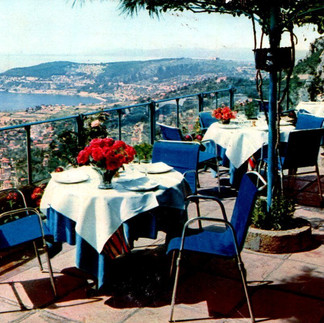
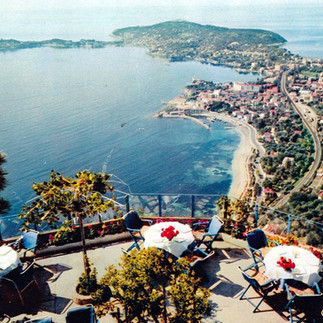
From its terraces, visitors could take in both the Beaulieu harbor and the deep, luminous curve of the Saint Jean Cap Ferrat peninsula—views so expansive they seemed painted onto the horizon.
The hotel was expanded several times, modified to follow shifting tastes, and updated to meet the expectations of wealthier and more cosmopolitan travelers. But even as it evolved, it never lost its whimsical soul.
Guests Drawn to Sunlight, Solitude, and Secrets

While the Château de Madrid never reached the fame of the Riviera’s grandest hotels, it attracted a quiet and intriguing clientele—people who preferred discretion over glitter.
The Incognito Novelist
In the 1930s, a well-known English novelist stayed at the Château under a pseudonym. He claimed the view from his suite made the Mediterranean look “as if it were listening,” and he drafted an entire chapter of a future bestseller from the terrace overlooking Cap-Ferrat.
The Escaping Heiresses
In the 1950s, two scandal-struck American heiresses fled New York society and hid at the Château for nearly a month. Staff recalled hearing them dancing barefoot late into the night, gramophone echoing down the stone corridors—determined to forget the headlines waiting for them back home.
The Painters Who Chased the Light
Several painters, attracted by the region’s unparalleled winter luminosity, set up small temporary studios inside the hotel.
These stories—half-whispered, half-documented—give the Château de Madrid the air of a place that kept its guests’ secrets safe.
Architectural Curiosities and Hidden Corners






The Château de Madrid also belongs to a unique architectural tradition on the French Riviera: buildings designed not simply to function, but to astonish. Like Villa Kérylos or the Villa Ephrussi de Rothschild, it blurs the line between art, and spectacle.
Secret Internal Stairways
The hotel contained several narrow service staircases, built so staff could move unseen. One hidden passage connected directly from the upper floors to a private garden terrace. Another is rumored—though never confirmed—to have once led toward a villa farther down the hill.
Vaulted Stone Cellars
Beneath the Château lie vaulted storage rooms shaped like medieval armories. During World War II, these cellars sheltered local families during air raids, quietly echoing the building’s “castle” identity.
From Grand Hotel to Private Residence

Over the decades, changing travel habits reshaped the Riviera, and the Château eventually retired from life as a hotel. It was converted into a private residence, its towers and terraces now quiet, its corridors no longer echoing with gramophones or typewriters or whispered dramas.
Yet the building endures—an elegant sentinel watching over two harbors, a reminder of a time when imagination ruled architecture and the Riviera treated fantasy as a design principle.
The Château de Madrid stands today as a tribute to what the region once dreamed of becoming—and to the people who came searching for light, reinvention, or simply a place to disappear for a while.



Comments