
Le Navirotel: A Monument of Riviera Ambition, War, and Architectural Renewal
- Jameson Farn

- 2 days ago
- 3 min read

Perched dramatically within the rugged folds of the Estérel mountain range, overlooking the deep blue sweep of the Mediterranean along the storied Corniche d’Or, Le Navirotel was not merely a hotel—it is a testament to the Riviera’s interwar ambition, wartime upheaval, and enduring capacity for reinvention.

The origins of Le Navirotel trace back to 1926, when entrepreneur André Hazebroucq undertook what was, at the time, a staggering architectural gamble: the construction of an immense resort complex carved into one of the most striking and unforgiving landscapes on the Côte d’Azur.
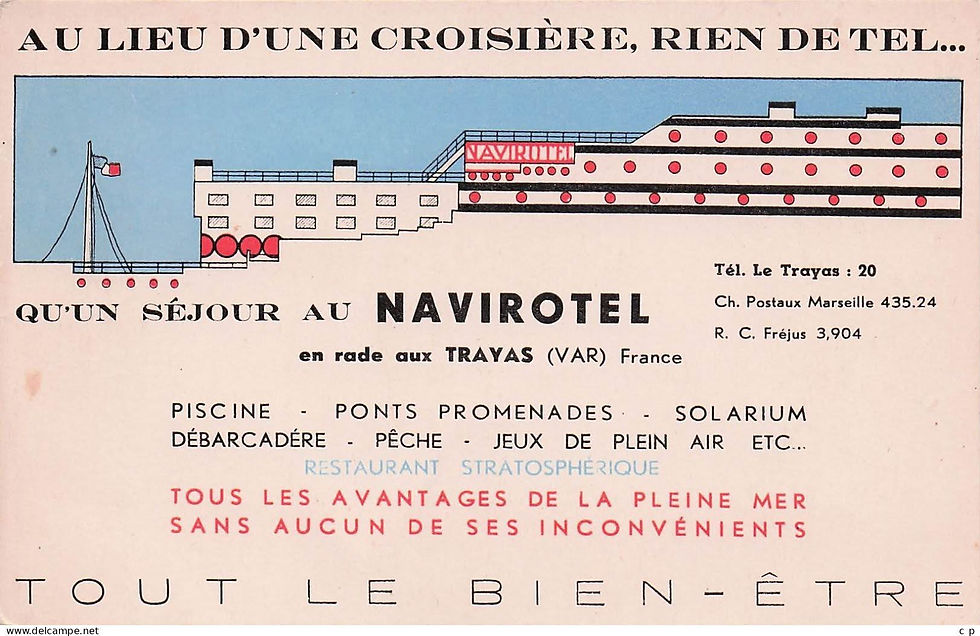
Built at a moment when the French Riviera was emerging as an international symbol of leisure, luxury, and modernity, the project reflected the era’s belief that architecture itself could be an act of spectacle.

The construction would take nearly a decade—an indication not only of the building’s scale, but of the technical challenges involved in anchoring such a structure into the red porphyry cliffs of the Estérel.

When Le Navirotel was finally inaugurated in 1936, it stood as a bold expression of prewar Riviera optimism: expansive terraces oriented toward the sea, sweeping horizontal lines echoing the coastline, and a commanding presence that blended monumental ambition with the emerging modernist sensibilities of the interwar period.

From the outset, the hotel attracted immediate attention and astonishing popularity, quickly establishing itself as a destination in its own right rather than a mere stop along the coastal road.

That prosperity, however, would prove fragile. On August 20, 1939, as Europe edged toward catastrophe, the momentum of Le Navirotel came to an abrupt halt. The outbreak of war transformed the Riviera from playground to strategic zone, and the hotel’s role shifted accordingly.
By 1944, Le Navirotel had been requisitioned and converted into a military hospital, its grand halls and sunlit rooms repurposed for care rather than leisure. Wounded American soldiers from the U.S. 83rd Infantry Division—many of whom had participated in the Normandy landings—were treated within its walls, embedding the building with a layer of wartime history that stands in stark contrast to its glamorous origins.
With the war’s end, Le Navirotel entered yet another chapter. In 1948, the hotel reopened, symbolizing both continuity and recovery during a period when Europe sought to rebuild not just its cities, but its cultural and social life. For decades thereafter, the building remained a quiet witness to the changing rhythms of the Riviera, its architecture bearing the marks of time, adaptation, and survival.

The most recent chapter in the Navirotel’s story began in September 2023, when an ambitious restoration project was launched under the direction of architect Pasqualini. Over the course of 20 months of colossal work—completed in July 2025—the building was meticulously restored to its former grandeur. Rather than erasing history, the renovation sought to recover it: reasserting the original architectural intent, respecting the building’s monumental proportions, and reestablishing its dialogue with the surrounding landscape of sea and stone.
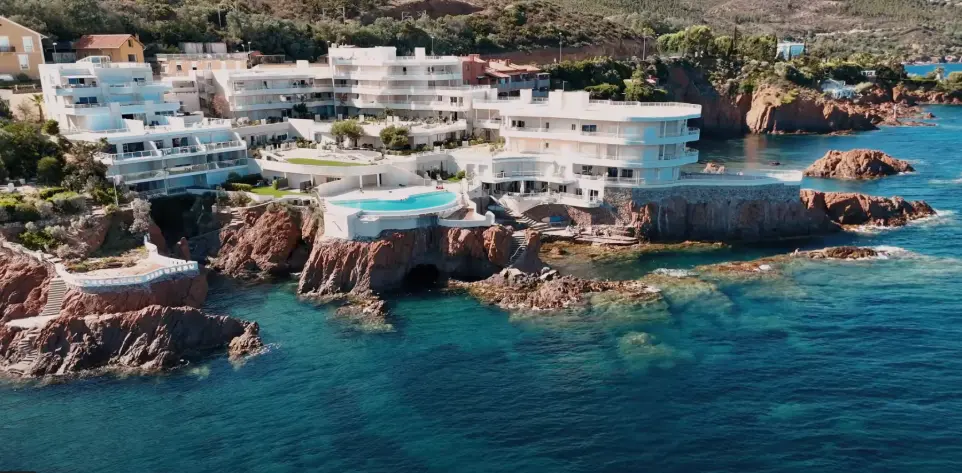

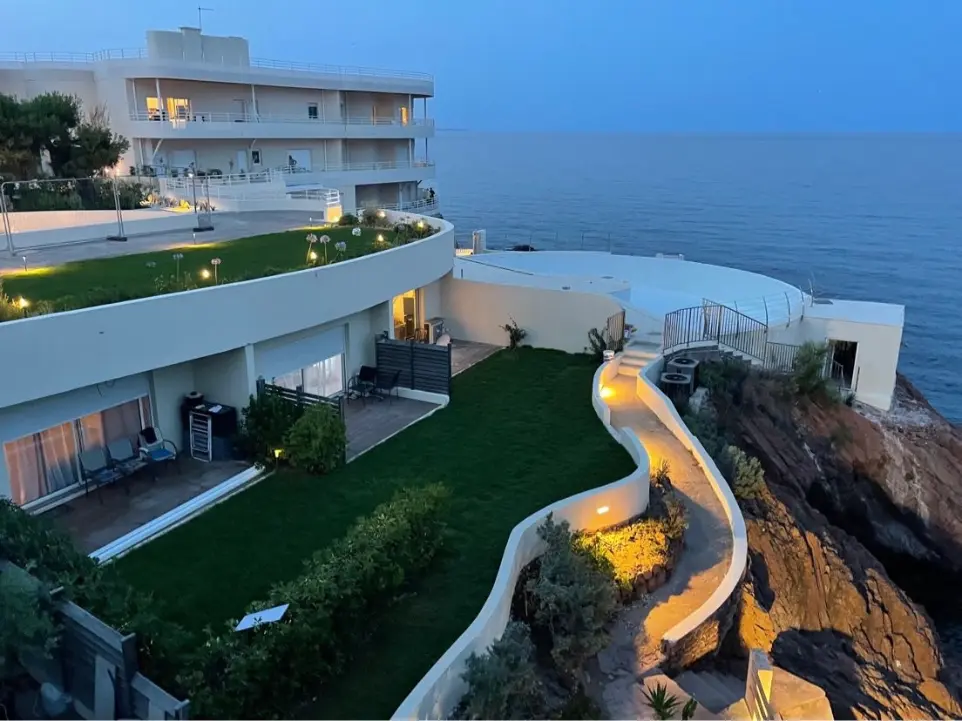
Today, Le Navirotel stands renewed, not as a replica of the past but as a palimpsest—its walls holding the traces of Riviera glamour, wartime necessity, postwar resilience, and contemporary architectural care. In an era when so many historic coastal landmarks have been diluted or erased, the renaissance of Le Navirotel serves as a rare reminder that preservation, when done with ambition and respect, can restore more than a building—it can restore memory itself.


Comments